
Hypervolt Home 3 Pro EV Charger Installation Guide UK
You’re in the market for a new home EV charger, and you’ve come across the Hypervolt Home 3 Pro. Great. However, now you want to know how it’s installed, what you need to have in place, what it typically costs, and if you can save with any government grants.
If that’s the case, you’re in the right spot. We’ll cover everything about Hypervolt Home 3 Pro Installation. By the end of the post, you’ll know about the entire product and its installation process, so you can make an informed decision on whether it’s the right charger for you.

What is the Hypervolt Home 3 Pro?
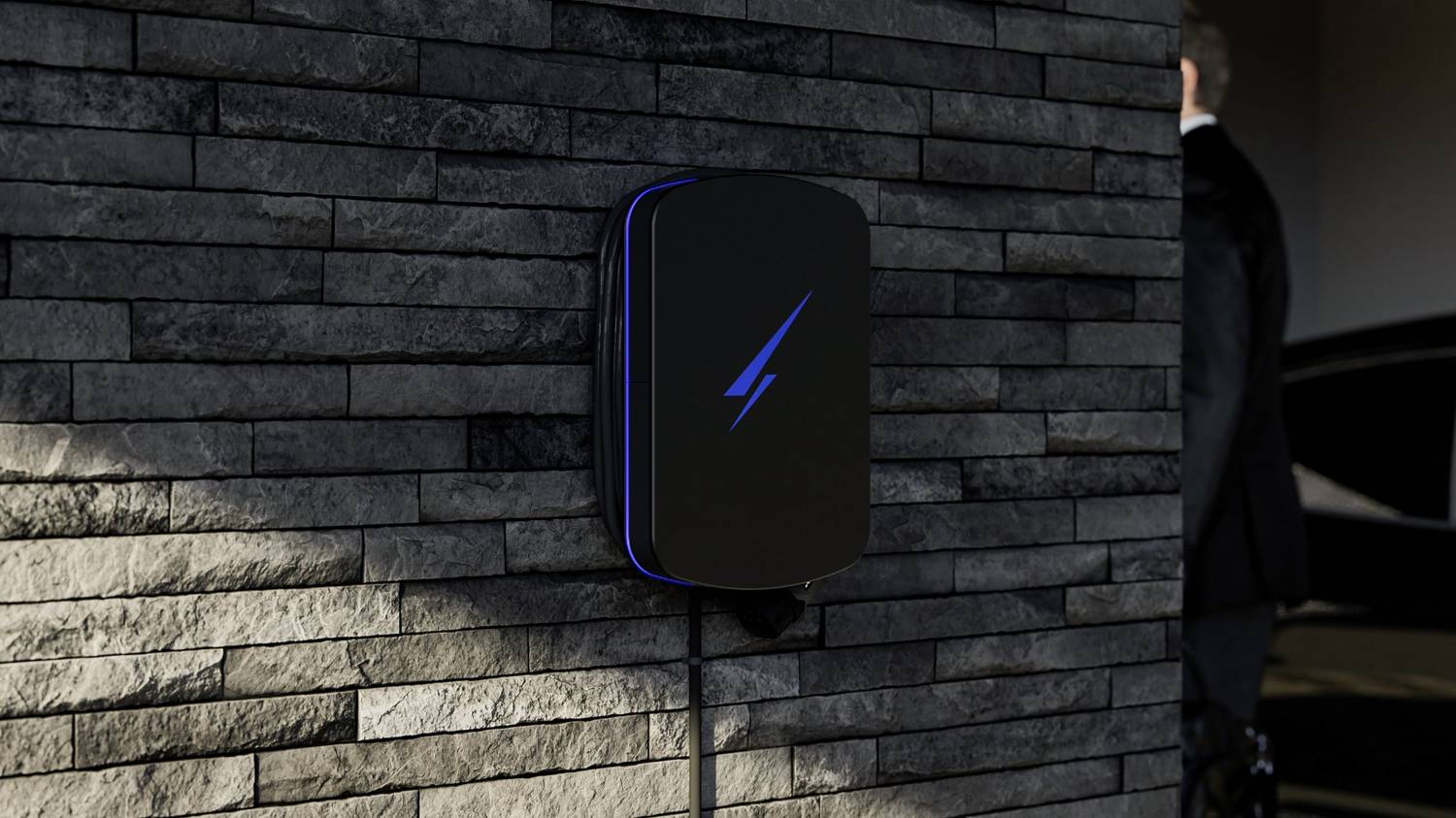
The Hypervolt Home 3 Pro is a smart, tethered home EV charger that’s designed around the typical UK domestic setup, 7.4kW single-phase (32A).
Its main features include:
- Tethered Cable: The Type 2 cable is fixed to the device and stored with a holster.
- Multiple Cable Lengths: Cable lengths are available in 5m, 7.5m, and 10m.
- Wireless Connectivity: Access app controls via wifi, Bluetooth, or Ethernet.
- Weather & Impact Resistance: IP66 dust/water protection and IK10 impact resistance.
Alongside this, it comes with a 3-year warranty. You can get 5 years of enhanced protection at an extra cost as well.
Why Choose a Professional Hypervolt Installer
Hypervolt EV charger installation should always be carried out by a trusted professional. This ensures:
Compliance with UK Regulations
In the UK, EV chargers are regulated in multiple ways. This includes electrical safety rules, building regulations, and Electric Vehicles (Smart Charge Points) Regulations 2021.
If work is DIY’ed or carried out by a non-professional, then the installation can be non-compliant. This could result in expensive rework, a charger that doesn’t work efficiently, and much more.
A professional installer, on the other hand, can ensure that it’s compliant. They will ensure that Part P Building Regulations are followed, and for workplaces, that the Electricity at Work Regulations are met, etc.
In other words, the job gets done correctly. You get peace of mind knowing that the EV charger is installed in accordance with UK regulations, saving you time, money, and headaches.
Timely DNO Notification
With the Hypervolt charger installation, your local DNO must be notified. This is either before installation via a G99 Application or after installation via a G98 Application.
Whether or not your DNO needs to be notified before or after the installation will depend on your specific requirements and installation. This is something that a qualified installer will be able to discover, manage, and complete.
If you decide to do this, several technical, legal, and financial issues can arise. For example, you may breach UK electrical regulations, your electrical supply could be at risk, you can face insurance claims, etc., so it’s more than worth getting a professional installer to handle this.
Warranty Protection
As with most manufactured products, the manufacturer requires the product to be installed in accordance with their instructions. Failing this, when it comes to making a warranty claim, you may be left in the dark.
DIY work, modifications, or poor commissioning can result in you losing warranty protection on your Hypervolt EV charger. By getting a professional installer, though, you’re guaranteed it is fitted properly, as well as having a paper trail of the fitting to use as evidence.

Insurance & Liability
If an EV charger is installed poorly and causes damage (like fires, electrical faults, or injury), liability can become messy, especially for businesses and landlords.
A professional installer reduces this risk by producing the compliance evidence as well as installing it to code, saving you from potential legal issues.
How Hypervolt EV Charger Installation Works (Step-by-Step)
We’re going to walk through a typical fitting process from a Hypervolt-approved installer. However, this should be used as an educational guide, not DIY instructions.
Step 1: Property Survey
A ‘property’ survey is where most installation issues are prevented.
This survey usually covers:
- Parking and Cable Reach: Whether the car actually parks every day, which side the charge port is on (varies by EV), and if the suggested location is allowed in accordance with regulations, etc.
- Mounting Surface and Positioning: Confirming a safe, durable fixing point (brick, block, or garage wall) or considering a pedestal-type charging arrangement.
- Cable Route Planning: This includes whether the cable run is internal, external, or mixed, and whether it needs trunking, passing through a wall, or whether there are any obstacles.
- Connectivity Planning: Hypervolt supports wifi, Bluetooth, and Ethernet, so a survey will be carried out to see if wifi or Ethernet is the most reliable connectivity option.
What the installer is figuring out during this process is how they can eliminate any technical, safety, usability, and cost problems before installation.
Step 2: Electrical Assessment
This is when the Hypervolt installer determines whether your existing electrical supply can safely support an extra 7.4kW load.
A thorough assessment usually includes:
- Supply Type and Load Headroom: The Hypervolt Home 3 Pro is a 7.4kW charger, so the assessment will be whether or not your supply and existing usage can support that load safely.
- Consumer Unit Capacity and Protective Devices: They’ll also check whether there’s physical space and suitable protective capacity for a dedicated EV circuit or if consumer unit upgrades are required.
- Earthing Arrangement and EV Safety Approach: A professional installer will choose the correct protection method for your property’s earthing system in line with current practice and standards-based guidance.
Step 3: Dedicated Circuit Installation
Once both the property and electrical assessments are finished, the installation can then go ahead.
This includes:
- Installing a dedicated breaker/protective device for the EV circuit.
- Installing a suitably sized cable for the run length and installation method.
- Installing an isolation method where required so the charger can be safely isolated for maintenance.
- Running and fixing cables neatly.
For businesses installing multiple units, this stage will be much more complex.
Step 4: CT Clamp Installation
Though almost all EV chargers come with a CT clamp, they’re not installed internally. The installer will need to fit the CT clamp themselves.
During this step, the installer will identify the correct meter trails and measurement point where the clamp should sit. Once installed and routed correctly, the charger is then configured so that load management behaves correctly.
Note that if your home has additional energy systems, like AC-coupled batteries, Hypervolt suggests that you may need two CT clamps installed to monitor additional sources.
Step 5: Testing & Commissioning
Once everything is installed, the fitter will then test and commission the unit to ensure it’s working as intended.
Typically, commissioning includes:
- Electrical Verification: Confirming the circuit is safe and correctly wired with recorded results for an Electrical Installation Certificate (EIC).
- Confirming the Charger Settings: Ensure connectivity is working, that the customer has the app working, and ensure load management via CT clamp, etc.
- Explaining Ownership Basics: A good installer will show you the basics of how the charger works, so the user is informed on how to use it.
During this step, the installer will also contact your local DNO and fill in the G98 Application on your behalf. If a G99 Application was needed, this would have been completed during the assessment steps.
Hypervolt Installation Requirements & Electrical Considerations
Before hiring a Hypervolt EV charger installer in the UK, it’s always a good idea to know whether or not an EV charger will work at your home. This is identifiable through several installation requirements.
Supply Capacity
Your home’s electrical supply has a maximum rating, protected by a 60A, 80A, or 100A main fuse.
An EV charger running at 7.4kW draws around 32A continuously. Therefore, if other high-load appliances, like an electrical shower, heat pump, immersion heater, etc., are operating at the same time, the total demand may exceed your supply limit.
Therefore, you’ll need to see whether or not your current supply capacity has enough headroom for the additional EV charger. If not, upgrades may be required.
Earthing Requirements
Because the unit is usually installed outdoors and connected to a vehicle, EV charging has very specific safety considerations.
This mainly involves your property's earthing system (TN-C-S/PME, TN-S, or TT), as this determines what protective measures are required to ensure safe operation under fault conditions.
If, for whatever reason, the earthing arrangement is not suitable for direct connection, additional protection methods may be required.
Location Requirements
Whether your EV charger can be installed also depends on the actual charger position requirements as well.
The mounting surface should be structurally fit, the cable route from the consumer unit must be accessible, the charging cable must reach the vehicle's charging port, etc.
In some properties, certain layouts have more constraints than others. This will ultimately impact the installation process and make it more complex and costly.

Hypervolt Installation Cost in the UK
Hypervolt Home 3 Pro installation cost should be looked at in two layers: the charger itself and the installation cost.
At Impra Charge, the charger-only price is £674.99 (inc VAT). Charger, including installation, on the other hand, starts from £1,086 (inc VAT).
The “starts from” is very important. Every project is different and comes with its own complexities. Therefore, the more complex the project, the higher the costs the customers will encounter.
According to the Energy Saving Trust, though, chargepoint installation costs around £800 to £1,200. This should be able to help provide a ballpark figure.
For an updated and realistic quote, feel free to contact us at Impra Charge. We’ll be able to quote for the entire project.
Running Costs of Hypervolt Home 3 Pro
When it comes to running costs of the Hypervolt Home 3 Pro, it’s around 7p per mile.
This is cheaper than the 14p per mile for public charging and much more affordable than petrol or diesel.
Remember, though, this price can fluctuate. When you charge, your electrical tariff will play a role in how much it’ll cost to run a Home 3 Pro.
There are ways to save on EV charging as well. For example, by only charging during off-peak hours.
Government Grants & Funding for Hypervolt Installation
Helping with the Hypervolt EV charger installation cost are government grants and funding programs. Funding data correct as of May 2026. There are a number of them at the moment, including:
EV Chargepoint Grant
The EV Chargepoint Grant is for renters and flat owners. It’s designed to contribute towards the cost of buying and installing a socket.
Currently, the scheme allows you to claim 75% of the cost up to £350. There are, however, eligibility requirements, like getting an OZEV-approved installer to fit the unit.
Landlord Grant
For the Landlord Grant, you can also claim 75% of the costs up to £350. However, it can be used across multiple properties, not just one. Again, there are eligibility requirements, like the rest of the government grants available.
Workplace Charging Scheme (WCS)
The Workplace Charging Scheme (WCS) supports businesses, charities, and public sector organisations.
With this scheme, you can get 75% of the total purchase and installation cost up to £350 per socket. You can get up to 40 sockets installed over all property assets.
Infrastructure Grant
The Infrastructure Grant focuses on SMEs. It’s designed to cover both the installation of charging points and the “support infrastructure” needed to enable charging across multiple parking spaces.
For this grant, those who claim it can get up to 75% of the costs up to £15,000 per property. This does, however, include specific per-socket and per-parking-space cap rates that you’ll need to follow.
How Does Hypervolt Compare to Other Smart Chargers?
The Hypervolt Home 3 Pro is ideal for anyone looking for a solar compatible EV charging. However, if your goals are something else, like smart tariff optimisation, then other EV chargers may be more suited to your needs.
| Charger | Price | Power Output | Smart / Solar Capability | Connectivity | IP Protection | Warranty |
|---|---|---|---|---|---|---|
| Hypervolt Home 3 Pro | £674.99 | 7kW | Solar compatible | Wifi, Bluetooth | IP54 | 3-year warranty |
| Project EV APEX | £296.60 | 7kW / 22kW | Solar compatible | Wifi, 4G | IP65 | 5-year warranty |
| Ohme Home Pro | £549.99 | 7kW | Smart tariff optimisation | Multi-network 2G/3G/4G SIM | IP55 | 3-year warranty |
| Myenergi Zappi | £702.00 | 7kW / 22kW | Solar compatible | Wifi | IP65 | 3-year warranty |
| Evec | £389.99 | 7kW / 22kW | Standard smart charging | Wifi, Bluetooth | IP65 | 3-year warranty |
| Tesla Wall Connector Gen 3 | £519.99 | 7kW / 22kW | Tesla ecosystem integration | Wifi | IP55 | 4-year warranty |
| Ohme ePod | £520.00 | 7kW | Smart tariff optimisation | 3G/4G SIM | IP54 | 3-year warranty |
| Wallbox Pulsar Max | £535.00 | 7kW / 22kW | Solar compatible | Wifi, Bluetooth | IP54 | 3-year warranty |
| Pod Point Solo 3 | £624.99 | 3.6kW - 22kW | App-based smart charging | Wifi, 4G | IP54 | 3-year warranty |
| Easee One | £559.99 | 7kW / 22kW | Solar compatible | Wifi, 4G, RFID/NFC | IP54 | 3-year warranty |
Why Choose Impra Charge as Your Hypervolt Installer?
At Impra Charge, we’re a certified Hypervolt installer based in the UK, offering our services nationwide to residential and commercial clients.
OZEV Approved
Our technicians are approved by the Office of Zero Emission Vehicles (OZEV). Therefore, our installations meet current UK standards and grant requirements.
If you’re eligible for a grant, we can ensure the correct process is followed and the required documents are completed properly.
This, most importantly, allows you to be eligible for the grant, helping you save on the upfront costs of installing an EV charger.
Fully Qualified Electricians
All installations are carried out by fully qualified electricians with experience in EV charging systems.
As a result, all projects follow UK wiring regulations and best practices. This ensures that your Hypervolt charger is safely connected, properly protected, and fully tested before handover.
Due to such expertise, your installation is compliant and proper, guaranteeing you’re fully covered in the case of warranty or legal disputes.
Nationwide Coverage
We’re based in Peterborough; however, we have a network of nationwide installers. Because of this, we’re able to deliver a consistent and reliable service across the entire UK.
Having such a network allows us to coordinate the entire installation process for you, making getting your new EV charger fitted a breeze.
Residential & Commercial
Impra Charge also supports both homeowners and businesses. Therefore, it doesn’t matter if you want a single domestic unit or a complete workplace EV charging station; we’re here to help all customer types.
End-to-End Project Management
Our team can manage the entire project as well. We’ll identify the best EV charger for your needs, perform the right pre-installation assessments, install and commission the unit, notify the DNO, and offer post-fitting support.
Fast Lead Times
We aim to complete installations as soon as approval has been given. Our structured process and nationwide installer network allow us to keep timelines clear and efficient, so you can get your Hypervolt installed quickly without any delays.
FAQ
How can I set up a Hypervolt Home 3 Pro?
The professional should onboard you onto the Hypervolt Home 3 Pro. This includes installing and commissioning the unit, downloading the app, connecting it to wifi or Ethernet, and helping you configure the settings through the app.
Can a normal electrician install an EV charger?
Yes, if they are fully qualified. However, if you want to meet the government grant requirements, the electrician needs to be OZEV-certified.
What is the Hypervolt Home 3 Pro mounting post?
It’s a freestanding pedestal accessory. Therefore, instead of the unit being mounted on a wall via a wallbox, it’s mounted on a pedestal anchored into the ground.
What’s the standard installation for a Hypervolt EV charger?
This usually includes a property survey, an electrical assessment, installation, CT clamp fitting, testing, commissioning, full certification, DNO notification, and then customer onboarding.
Can I install a Hypervolt Home 3 Pro myself?
No. Installation must be carried out by a fully qualified electrician. DIY installation can invalidate insurance and warranty.
How long does it take to install a Hypervolt?
Most standard home installations can take anywhere from 2 to 4 hours. However, this largely depends on the complexity and size of the project.
Do I need planning permission to install a Hypervolt Home 3 Pro?
For most UK homes, no. EV chargers fall under permitted development. However, if you live in a conservation area, approval may be required.
What is the average cost of a Hypervolt EV charger installation?
At Impra Charge, our unit plus installation cost starts at £1,086 including VAT. For an accurate quote, feel free to contact us.
Do I need DNO approval before installing a Hypervolt charger?
Usually, no. The installer will notify the DNO after installation. They have 28 days to do this under Engineering Recommendation G98. For high-load or complex setups, though, approval may be required beforehand.
Can I charge any electric vehicle with a Hypervolt Home 3 Pro?
Yes, but additional equipment is needed. As standard, it comes with a Type 2 connector, so it can only charge EVs with a Type 2 charging point. If your EV has a Type 1 connector, you’ll need a Type 2-to-Type 1 adapter cable.
Is there a Hypervolt Home 3 Pro untethered option?
No. The Hypervolt Home 3 Pro is a tethered charger. Therefore, the charging cable is permanently attached to the unit.
Conclusion
If you want a smart, durable, and premium home charger in the UK, the Hypervolt Home 3 Pro is a great choice.
Though great, it’s only as good as its installation. Because of this, it’s always recommended to hire a professional fitter, especially someone who is OZEV-approved. This allows you to claim government grants and ensures the fitter has experience with EV charger installation.
That’s why we recommend you contact us at Impra Charge. We’ll be able to help you through every step of the process. From the initial consultation on the ideal EV charging unit to the installation and commissioning.