Myenergi Zappi EV Charger Installation Guide UK
Installing a home or workplace EV charger is more than ‘just’ adding a charging point. It’s about futureproofing your property, reducing running costs, and making daily driving simpler.
The Myenergi Zappi EV charger can do exactly that. It’s eco-smart, solar-friendly, and has multiple charging modes to facilitate your goals.
Due to its popular demand, we decided to do a full Zappi EV charger installation guide. You’ll learn everything about the product, its variants, how it’s installed, as well as who we recommend installing it.

What is the Myenergi Zappi EV Charger?
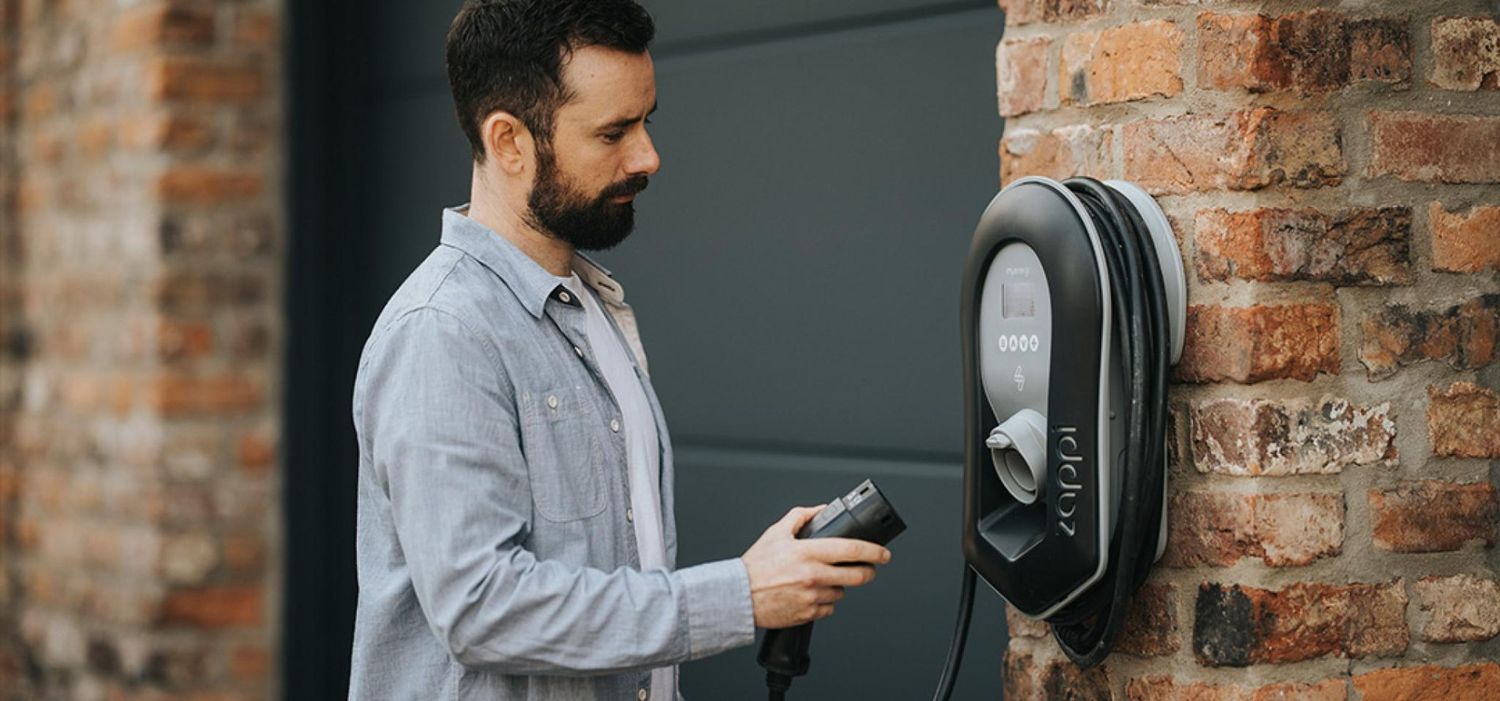
Myenergi Zappi is an “eco-smart” AC EV charger designed for UK homes. Unlike standard chargers that pull electricity from the grid, Zappi monitors your home’s electricity flow and can prioritise surplus renewable energy (like solar) when charging your vehicle.
With this EV charger, you have three charging modes, these are ECO, ECO+, and FAST. It's available in power ratings suited to 7kW (single-phase) or 22kW (three-phase) versions, and comes with a tethered or untethered connection type.
Myenergi Zappi Models
Myenergi’s current up-to-date model is the Zappi 2.1. This is available as a 7kW (single-phase) or 22kW (three-phase). The 7kW is generally more for domestic use, while the 22kW is more for commercial use or for larger properties.
That being said, the model type depends on the connectivity type and placement. You’re able to purchase this EV charger as tethered or untethered, as well as pedestal or wall-mounted, depending on your application purposes.
Tethered vs Untethered
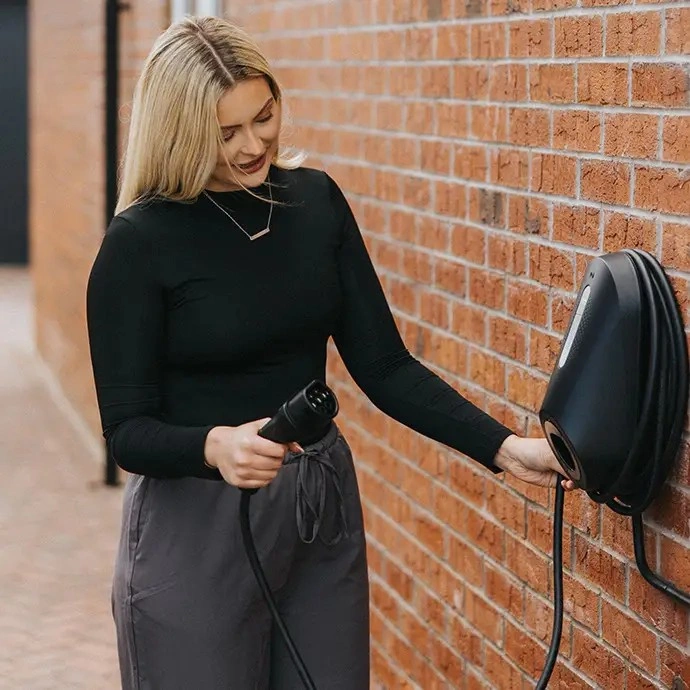
Tethered units have a fixed cable attached. These are fixed with a built-in Type 2 charging cable, which is the standard for newer EV’s. Untethered units, on the other hand, have no cable. They are socket-only, so you’ll need to use the cable that comes with your EV with these.
Most EV car owners have tethered units. This is due to convenience, as the cable is always ready to use. Untethered units are generally more flexible and benefit those with a Type-1 compatible EV (usually older second-hand EVs) or those who use different cables depending on the setup/vehicle.
Wall-mounted Vs Pedestal
Zappi Wallbox installation is a popular choice for homeowners, such as on a garage wall or something similar. If you don’t have a suitable wall, Myenergi sells a dedicated pedestal option that’s designed to be placed anywhere, from car parks to the end of long driveways.
While the Zappi Wallbox is suitable in most settings, Zappi Pedestal installation is suitable on some occasions. For example, for commercial settings, like a workplace or car park, or when cable protection is required.
The pedestal options can also be mounted back-to-back. Therefore, you’re able to install two Zappi EV chargers in one location, allowing for multiple EVs to charge in the same area.
Why Choose a Professional Zappi Installer?
Installing a Zappi charger isn’t a DIY project. It must be handled by a qualified electrician familiar with EV charging point regulations.
Safe & Compliant Installation
The Myenergi Zappi has been designed to meet UK electrical standards. Therefore, it has built-in safety features such as 6mA DC residual current protection (in line with EN 62955) as well as PEN fault protection.
Despite these features, some projects may require the installation of a surge protection device (SPD) under BS 7671 when fitting the new EV charger. That’s why it’s important you choose a Zappi charger installer that you trust and knows about the product and broader wiring rules in the UK.
Alongside this, UK regulations regarding development rights, charger location, electrical safety, etc., need to be followed. If an installer is deemed ‘unprofessional’, then it could lead to safety and regulatory issues down the line.
Correct Electrical Assessment
A professional installer will check whether your existing electrical supply can fully support the additional load. They’ll also perform any upgrades (if needed), such as consumer unit changes or handle supply discussion with the network operator.
While most homes can comfortably operate a 7kW charging point, some can’t. It depends on the other high-load equipment that has been installed, like a heat pump, electrical showers, induction cooking, etc.
DNO Notification & Paperwork
In the UK, you need to notify your local electricity network about the installation. Depending on the type of installation, you may need to notify them before or after.
For most home installations, it’s after installation; however, double-check your unique requirements. Notification is required within 28 days of commissioning under Engineering Recommendation G98, which your installer will normally handle on your behalf.
For customers, this process is a bit unnatural and confusing. Therefore, hiring a professional who’ll take care of the paperwork is a huge benefit.
Warranty Protection
Myenergi offers a 3-year warranty as standard. This is great. However, a warranty is only issued if the product is installed and commissioned correctly.
When you get a professional Zappi charger installation, you have a paperwork trail of certification, commission notes, and DNO notification, which can help demonstrate compliance for a warranty.
This is really the ‘core’ value of getting an expert installer. When it’s done in this way, it’s not just installed correctly, but safely and verifiably.
Government Grant Approval
Alongside the above, if you’re eligible for the OZEV (Office for Zero Emission Vehicles) grant, the charger has to be installed by an OZEV-authorised installer to receive the grant. Because of this, using a professional installer in this sense could actually save you some money upfront.
How Zappi EV Charger Installation Works (Step-by-Step Guide)
The following provides a broad overview of Zappi EV charger installation instructions; however, it’s not to be used as a DIY guide. Installation should be handled by a professional.
Step 1: Initial Property Survey
In the beginning, a professional will survey your property. They’ll look into where you park and where you want to charge (wall or stand), how cables will be routed, whether drilling or external trunking is required, etc.
With Myenergi Zappi installation, connectivity will be reviewed as well. This EV charger is designed to be internet-connected (either through wifi or Ethernet), which supports app-based controls and more.
For solar households, the survey will also include where the CT clamps will be placed to correctly measure grid import/export and generation.
Step 2: Electrical System Checks
The installer will then check supply type (single-phase vs three-phase), main fuse rating, consumer unit capacity/condition, and whether the installation requires additional protective components (like surge protection).
During this process, they’ll also consider the site’s maximum demand. This will help them determine whether or not they need to contact the local DNO before (G99 application) or after (G98 application) the installation.
Either now or in the initial survey, the Zappi EV installation professional will require information regarding how you’ll use the charger. For example, overnight on a low-cost schedule, via solar charging, or a mix? This will then help them shape the commissioning settings.
Step 3: Installing the Zappi Unit
Proper electrical work will be carried out first. The Zappi unit will then be installed. This will either be the Wallbox or the Pedestal unit.
Where the Zappi unit will be installed depends on your requirements. The wallbox could be mounted inside the garage, outside on the garage wall, next to your home, or on a different structure. A pedestal could be placed at the end of a drive, at a workplace, etc.
Mounting the Wallbox or installing the Pedestal unit is relatively straightforward and won’t take a long time. Most of the time will be spent on setting up the electrical works.
Step 4: Setting Up CT Clamps
Zappi CT clamp installation is where the ‘eco-smart’ part takes place. The supplied grid current sensor (CT clamp) clips around the incoming supply cable. This is then used to monitor excess power, allowing Zappi to automatically adjust charging rates based on available surplus.
CT clamp and configuration must be correct. If the clamp is on the wrong conductor, pointing the wrong direction, or not measuring all import/export, the charger will behave unpredictably and not efficiently.
Step 5: Testing & Final Setup
After the physical installation, a professional will inspect and test the unit. This includes commissioning the charger to ensure it’s usable and compliant with local and energy laws.
Based on your goals, whether it’s speed or cost savings, the installer will make sure your charger activates during the best times, for example, during off-peak hours for cost savings.
At this stage, installers will also help you register and control your charger in the app ecosystem. They’ll also contact the DNO notification if required.
What Is Zappi Harvi?
The Zappi Harvi is a wireless energy sensor designed to work alongside the Myenergi Zappi charger. Its main purpose is to transmit data from CT clamps back to the charger without needing hardwired cables.
It’s an optional extra; however, instead of hardwiring CT clamps, you can send, receive, and use inflow and outflow data captured by CT clamps wirelessly. Sometimes, this makes the installation process more seamless and less intrusive.
Zappi Harvi can’t be used on all installations, though. This device doesn’t meet G100 compliance. In other words, some installations will still require wired CT clamps to be compliant.
However, if yours doesn’t, this could be a way to save money on EV charging by having a less complex installation. The whole idea of Zappi Harvi's installation is to reduce installation time, which, as a result, will make the fitting cost cheaper.
How Much Does Zappi Installation Cost in the UK?
When it comes to the cost of any EV charger installation, prices can range. It depends on the charger type (tethered/untethered or pedestal/wallmount), installation complexity, and whether any additional electrical upgrades or groundwork are required.
The device itself is around £702. Installation starts at £1,100 from us at Impra Charge. You can request an official quote from our Zappi product page or by contacting a helpful representative at our company.
Regarding charging cost, Government guidance suggests this is around 8p per mile. This is much longer when compared to the 13p to 17p per mile for petrol/diesel vehicles. The cost of charging at home compared to in public is also more affordable.
Zappi Installation Limits
Every EV charger has some type of constraints. Some are physical, like where you park, and others are electrical (what your supply can deliver safely).
Supply Limits
A 7kW home charger is usually matched to a single-phase domestic supply. A 7kW EV charge point operates at 32A, so it adds 7kW to the load. In most cases, this can be accommodated, but not always, depending on the property's maximum demand and supply characteristics.
Their other model, the 22kW charger, requires a three-phase supply. However, a lot of homes don’t have three-phase setups. Unless there’s a three-phase supply available from the DNO, a home can only accommodate a 7kW charger.
Network/Operator Limits and Notifications
Another Zappi charger installation limit actually comes from the local DNO. Their goal is to manage network capacity and to ensure local supply remains safe and reliable.
In some cases, the installer can just connect a Zappi EV charger and then notify the DNO about the upgrade. Sometimes, though, the notification will need to be done beforehand in case any supply improvements are required before installation.
Import/Exporting Limiting and G100
Another ‘technical’ limit comes into play when the DNO sets a maximum import or export capacity for your site. This is often relevant when you have solar PV, storage, and high loads.
In such situations, the system must ensure that electricity being imported or exported from or to the grid doesn’t exceed the agreed limit.
The Engineering Recommendation G100 sets out these ‘rules’ on how import and export-limiting must operate. For example, some chargers may require a hardwired grid CT rather than a wireless measurement device.
What Grants & Funding Are Available for Zappi Installation?
If you’re thinking about getting a Zappi car charger installation, it’s worth looking into government grants and funding programs. These can help you save a bit of money if you qualify. Funding data correct as of May 2026.
EV Chargepoint Grant
If you’re a renter or flat owner, you can either get £350 or 75% off the cost to buy and install a socket (whichever is lower). This is also for properties with on-street parking (must be designated), so you can apply for the cross-pavement charging solution installation.
Workplace Charging Scheme (WCS)
For workplaces, the WCS can cover up to 75% of the purchase and installation cost. This is capped at £350 per socket and a maximum of 40 sockets across all sites per applicant.
There’s also a dedicated scheme for state-funded education institutions (like schools), with different caps and rules. The institutions can apply for grants of up to £2,500 per charge point socket and can have up to 40 sockets across all sites.
Grants for Landlords & Businesses
Landlords can get either £350 or 75% off costs (whichever is lower) per socket. Such a grant is limited per financial year as well. Therefore, you can only get 200 grants for residential and 100 for commercial each year.
How Does Zappi Compare to Other Smart EV Chargers?
The “best” charger depends on what you want, whether it be solar usage, low-cost tariff automation, physical design, app features, or business reporting.
Anyways, Zappi EV charger installation is mostly recommended for those who value solar usage and wifi connectivity. These are the key selling points of the device.
| Charger | Charger Only Price | Max Power | Solar / Smart Support | Connectivity | IP | Warranty |
|---|---|---|---|---|---|---|
| Myenergi Zappi | £702.00 | 7kW / 22kW | Full solar modes | Wifi | IP65 | 3 yrs |
| Evec | £389.99 | 7kW / 22kW | No | Wifi, Bluetooth | IP65 | 3 yrs |
| Wallbox Pulsar Max | £535.00 | 7kW / 22kW | Solar compatible | Wifi, Bluetooth | IP54 | 3 yrs |
| Pod Point Solo 3 | £624.99 | 3.6kW-22kW | No | Wifi, 4G | IP54 | 3 yrs |
| Ohme Home Pro | £549.99 | 7kW | Smart tariff optimisation | 2G, 3G, 4G SIM | IP55 | 3 yrs |
| Ohme ePod | £520.00 | 7kW | Smart tariff optimisation | Wifi | IP54 | 3 yrs |
| Tesla Wall Connector Gen 3 | £519.99 | 7kW / 22kW | Tesla ecosystem integration | Wifi | IP55 | 4 yrs |
| Hypervolt Home Pro 3 | £674.99 | 7kW | Solar compatible | Wifi, Bluetooth | IP54 | 3 yrs |
| Easee One | £559.99 | 7kW / 22kW | Solar via Equaliser | Wifi, 4G, RFID, NFC | IP54 | 3 yrs |
| Project EV APEX | £296.60 | 7kW / 22kW | Solar mode | Wifi 4G | IP65 | 5 yrs |
Why Choose Impra Charge as Your Myenergi Zappi Installer?
At Impra Charge, we deliver an end-to-end EV installation service, helping you find the best charger for you, surveying your property, installing your device, handling all necessary documentation, and providing post-installation support.
Certified & Experienced Installers
Impra Charge is accredited by the Office for Zero Emission Vehicles (OZEV), which allows us to install government-granted EV chargers.
We also have a nationwide team of approved installers. Therefore, installation is typically completed within 14 days of approval.
Residential & Commercial Installations
We support both residential and commercial applications. Regardless of whether you’re installing a single home charger or deploying multiple units at a workplace or commercial property, our team is ready to deliver its services.
Full Support From Survey to Installation
Our process starts with a free quotation either through a home visit or an online survey. This is then followed by professional installation and full document handling.
As a result, from the initial enquiry to the final commissioning, we make sure your EV charger installation is completed safely, correctly, and with full compliance.
Zappi Installation in London, Manchester & Across the UK
While being based in Peterborough, our services are available nationwide. We can offer Myenergi Zappi installation services across Manchester, Peterborough, and more.
Our network allows us to expand into areas such as Scotland and Wales as well. This ensures that we’re able to help customers across the entire UK, not just our local area.
FAQ
Are Zappi chargers any good?
Yes, Zappi chargers are highly regarded as ‘good’, especially for homes with solar panels. Some of their key selling features include multiple smart charging modes (ECO, ECO+, and FAST), built-in safety protections, and flexible power options (7kW and 22kW).
How can I set up the Myenergi Zappi app?
After the Zappi has been installed, download the Myenergi app, create an account, and connect your charger using its serial number and wifi connection. Once linked, you’ll be able to monitor charging sessions, set schedules, and manage changing modes directly from your phone.
Can I install my Myenergi Zappi charger myself?
No, Zappi must be installed by a qualified electrician. The process involves high-current electrical work, DNO notification, and compliance with UK wiring regulations, so a DIY installation should be avoided at all costs.
Do I need a Zappi Hub for my Zappi EV charger?
No. Zappi is a screen-based EV charger, so the Zappi Hub doesn’t benefit it much. This product is more for the Zappi GLO, which doesn’t have a screen-based interface on the charger.
Conclusion
After reading this Zappi installation guide, you should have a full understanding of what the EV charger is, its different types, why it should be installed by a professional, how it’s installed, and who can install it.
As you know, installing a Zappi EV charger isn’t a DIY project. It’s a project that should be carried out by a qualified electrician who understands the legal and safety landscape of residential and commercial EV charger installation.
At Impra Charge, we can manage the entire process for you. We can help you choose the right EV charger, survey your property, install the equipment, notify the DNO, provide full certification, and offer post-installation support.
If you want to get a Zappi EV charger installed, or perhaps want to know if this is the best EV charger for you, feel free to contact one of our professionals today.